
Insulation is sold on one number, the R-value, and chosen on three things: where it goes, how much depth you have, and whether the wall or roof also has to manage moisture and fire. AWBM stocks the full range across those decisions, from CSR Bradford and Fletcher batts to rigid PIR board and acoustic systems.
By where it goes
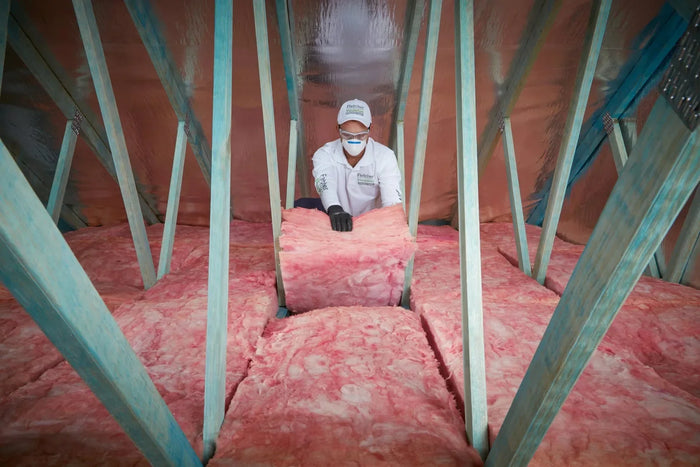
Ceiling Insulation
The highest return in a house, because most heat is lost and gained through the roof. R3.5 to R6.0 covers almost every Australian ceiling.
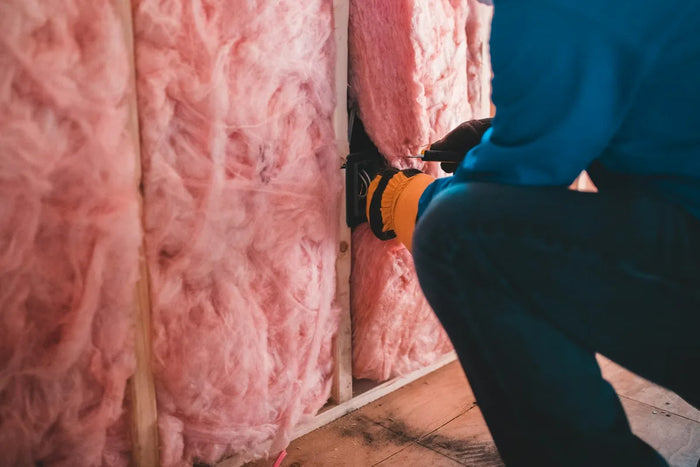
Wall Insulation
Batts, wall wraps and reflective membranes. The stud depth sets the ceiling on R-value, which is why HP grades and rigid board exist.
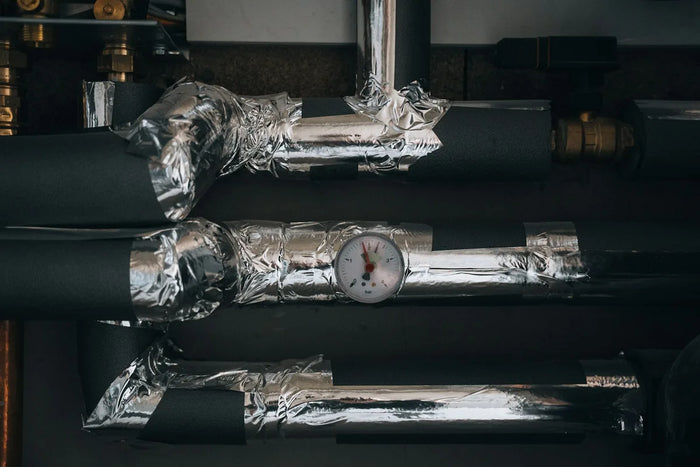
Acoustic Insulation
Partition batts, mass loaded vinyl and pipe lagging. Rw belongs to the whole wall, not the batt, so the system matters more than the product.
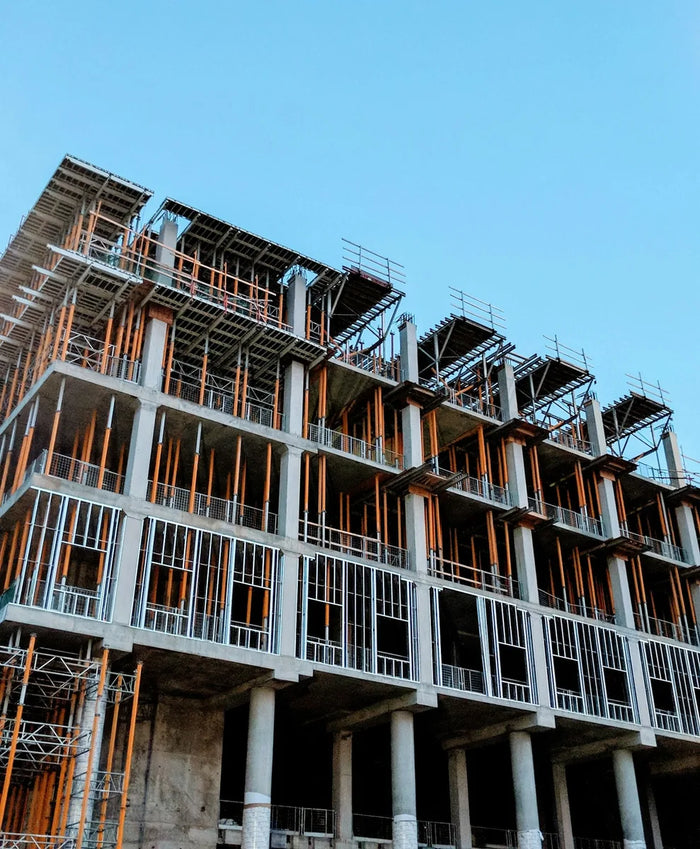
Commercial Insulation
Rockwool, HVAC blankets and boards, non-combustible membranes and the fire classifications a Type A or B building needs.
By material and application
How to choose an R-value
R-value is thermal resistance in m²K/W. Higher resists more heat flow. Two figures get quoted and they are not the same thing: the material R-value is the product on its own, and the total system R-value is the product working inside a real wall or roof with its air spaces. Manufacturers publish both, and we list both in the spec table on each product page.
| Where | Commonly specified | What limits it |
|---|---|---|
| Ceiling, pitched roof | R3.5 to R6.0 | Nothing much. There is depth available, so go higher. |
| External wall, 90 mm stud | R2.0 to R2.7 | Stud depth. HP grades pack more R into the same 90 mm. |
| Internal partition | R1.5 to R2.5 | Acoustic performance usually drives this, not thermal. |
| Suspended floor | R2.0 to R2.5 | Joist depth and how the batt is held up. |
| Fixed shallow cavity | R1.0 to R4.3 | Use rigid board. PIR is about half the thickness of a batt for the same R. |
Three things reduce the R-value you actually get, and all three are installation, not product: compressing a batt into a space smaller than its thickness, leaving gaps at the perimeter, and pressing a reflective foil against another surface so it has no air gap to reflect into.
Insulation, membrane and thermal break are three different jobs
- Bulk insulation resists conducted heat. Batts, blanket, board. Sold on R-value.
- Reflective insulation resists radiant heat. It only works facing an air gap, and it is rated by emittance rather than by R on its own. See building membrane.
- Thermal break stops conduction through the frame itself. Only steel framing needs it, and the NCC asks for R0.2. See ThermalBreak strips.
Most buildings need at least two of the three. If you are not sure which, send us the wall or roof build-up and we will specify it.
Supply or supply and install
We install insulation batts, wall wrap and sarking across Victoria and New South Wales. Roofing blanket, safety mesh, spacers, thermal break, rigid board and mass loaded vinyl are supply only, because those go on in the roofer's window as the sheets go down. Delivery is free within 50 km of our Epping warehouse with no minimum order, and a flat $55 per order elsewhere in VIC and NSW.